

This post is a reflection from our Waldorf Times community, offering a behind-the-scenes look at what it actually takes to turn an idea into a finished piece of filmmaking. At Waldorf, student journalism and media-making are not only about documenting school life; they are about learning to work as a team, make creative choices, solve real problems under pressure, and communicate meaning through craft.
In this short production diary, the filmmaker reflects on collaboration, improvisation, and the many small decisions—camera angles, props, sound, editing—that shape how a story lands. It also points to a larger theme we value in our student work: using art and media not just to entertain, but to explore character and conscience—especially the quiet courage of kindness.
By Rama Abdallah – Communications Coordinator
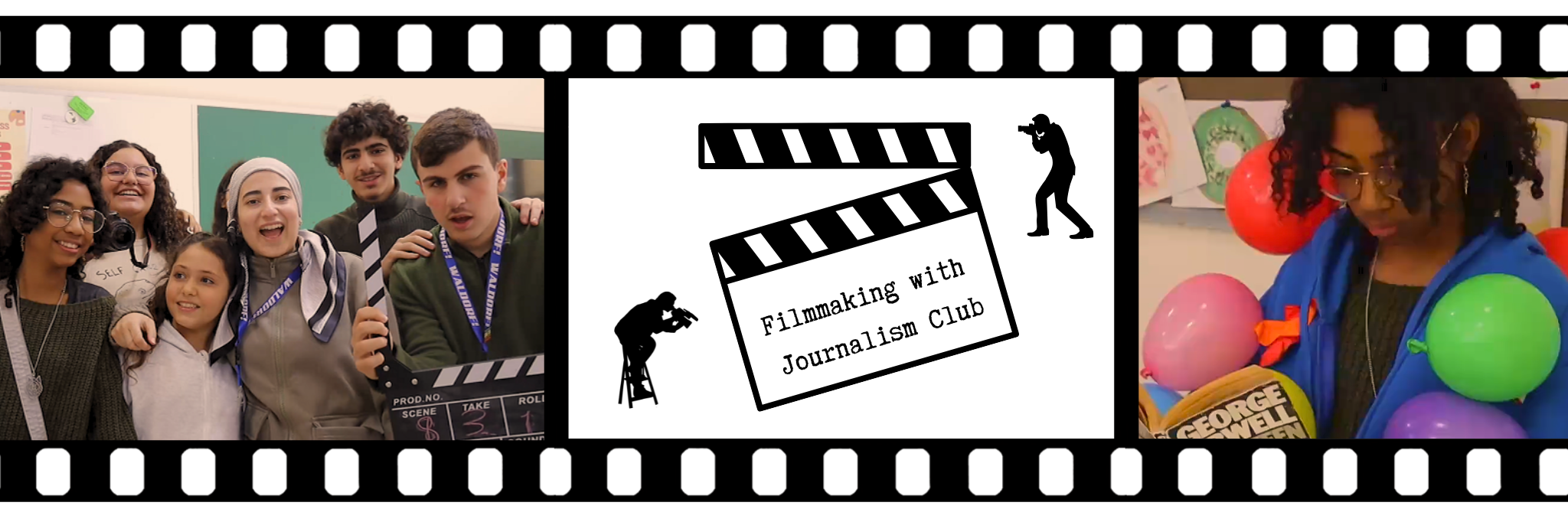
Bringing this idea to life—and acting it out—was challenging. We weren’t just “two eyes and one camera.” Our team included three camera operators, one assistant director/props lead, and one director. We didn’t always agree on a single perspective for the film, but we kept finding a middle ground—especially once the footage from all three cameras came together in the final montage.
The props were some of the most fun (and most exhausting) parts. We kept exhaling air to fill the balloons and cover the jacket so it would resemble balloons. In my mind, I imagined the air coming from the students blowing the balloons as bad words—filling the balloons and giving them weight. That connects to the theme I chose for the short film: kindness. Being mean, harsh, or “badass” is often treated as the coolest thing in the world. You can see that in the younger generation and on a global level too: the “strongest” country is often praised as an international example to follow—like the language I’m writing in now.
Our sound operator, Ward Yousef (Grade 7A)—who also played an extra—discovered a hidden talent: staying in character. (Most of the time!) Once he laughed out loud while playing the “classmate,” and another time he pretended to faint just to prank us.
If someone passed by our classroom, it probably looked chaotic. But some students took it seriously and really used the opportunity. “I learned how to hold a camera and scream at people,” Rakan Bani Ahmad (Grade 11A) said.
I decided to keep the props simple and sweet, which meant we had to think fast and play smart. For example, we filled my tote bag with my jacket and turned it into a pillow for the bedroom scene. I also generated an AI photo of our lead student-actor, Zara Onyango (Grade 6B), as a one-year-old baby because we didn’t have a real baby photo to work with.
Finally, I felt the real-life friendship between Zara and Celina Mansour (Grade 6B) came through in their acting. When they played their characters as friends, it strengthened their roles—and made the performance feel authentic.