


By Razan Mbaideen – Activities Coordinator
As Waldorf’s Activities Coordinator, I’m often in spaces where students are full of ideas, emotions, and energy. It might be during a student council meeting, a school event, or a casual discussion in the hallway and before I know it, the conversation turns into a passionate debate.
What I truly enjoy about these moments is seeing how much our students care. They want to be heard, they want to express what they believe in, and they’re eager to make a difference. But I’ve also learned that having a strong opinion is only half the skill the other half is knowing how to express it respectfully.
THE POWER OF DIALOGUE
One of our goals at Waldorf is to create an environment where students can speak freely without fear of being dismissed or misunderstood. Respectful communication is a skill that stays with them far beyond the classroom it shapes how they lead, collaborate, and solve problems.
Through my daily work with students, I see how a simple conversation can turn into a learning opportunity when:
- They listen to one another before reacting.
- They recognize how their words can impact others.
- They express their ideas with confidence, not confrontation.
- They understand that different opinions can all have value.
LIKE A BADMINTON MATCH
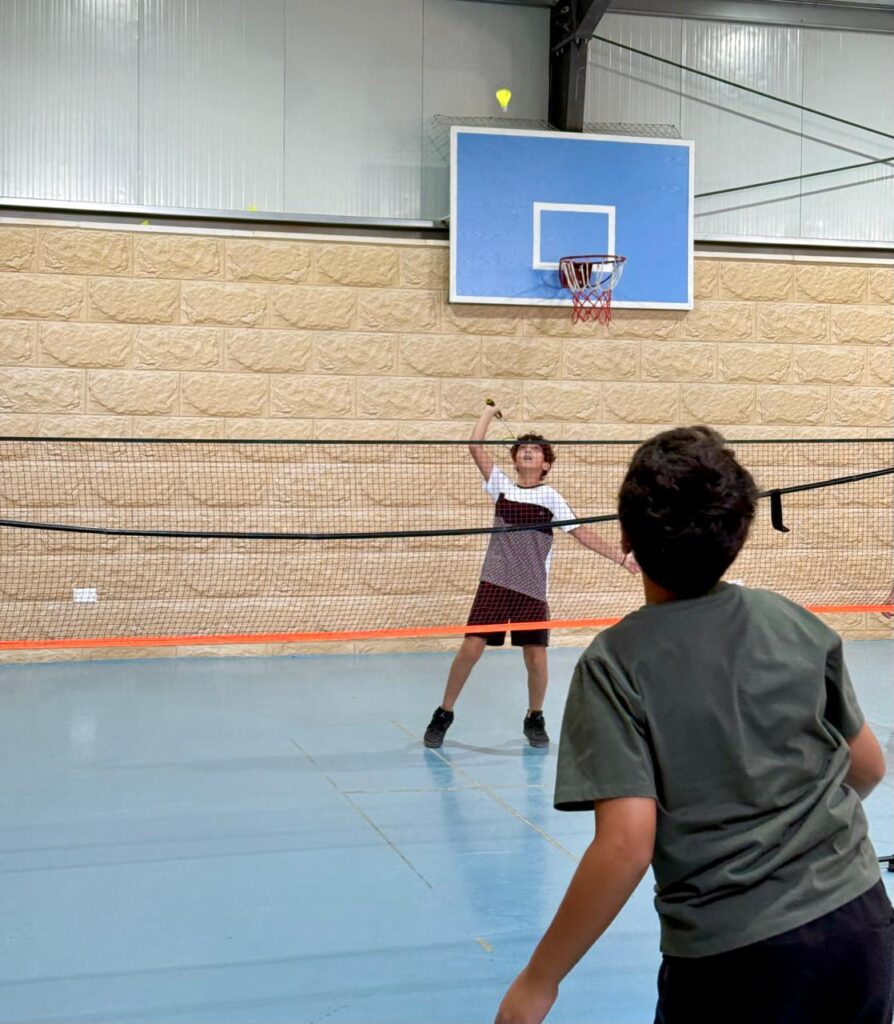
I think of healthy debate as a badminton match. Two players face each other across a net, fully engaged and committed. The shuttle moves quickly—back and forth, sometimes gently, sometimes with force—but always within shared rules. Each player waits their turn, responds thoughtfully, and adjusts without trying to overpower the person on the other side. It’s not just about scoring points: it’s about timing, awareness, and restraint. The best rallies are the ones where both players challenge each other and become sharper in the process.
This is how I hope our students come to understand dialogue. Strong ideas are welcome, but they need direction. Listening becomes the pause before the return. Respect is the net that keeps the exchange fair. Even disagreement, when handled well, can strengthen everyone involved.
That’s the kind of dialogue we aim to nurture at Waldorf: passionate but respectful, energetic but grounded. When students learn to “play the match” well, conversations stop being about winning and start being about growth.
OUR SHARED RESPONSIBILITY
My role as an Activities Coordinator isn’t just about planning events, it’s also about creating spaces where students learn how to express themselves, listen to each other, and grow together as a community.
When students learn how to disagree with respect, they build real leadership skills. They begin to see that their voice matters and so does everyone else’s.
Every conversation, every debate, every idea shared is a step toward building a stronger, more thoughtful school community.