

At Waldorf, as I walk past a Humanities class, there are times when I completely forget that this is a school…. I stop and think something feels different.
The atmosphere isn’t quiet as usual, nor loud as usual; instead, it’s alive.
Students are active rather than simply sitting at their desks. A student is debating an idea as if they feel personally connected to it. Another is exploring an event that took place centuries ago, yet speaks about it as though it is unfolding right now.
There is emotion, doubt, curiosity—sometimes even disagreement.
And it is in moments like these that you realize this is not simply a lesson being taught. It is a journey through time.
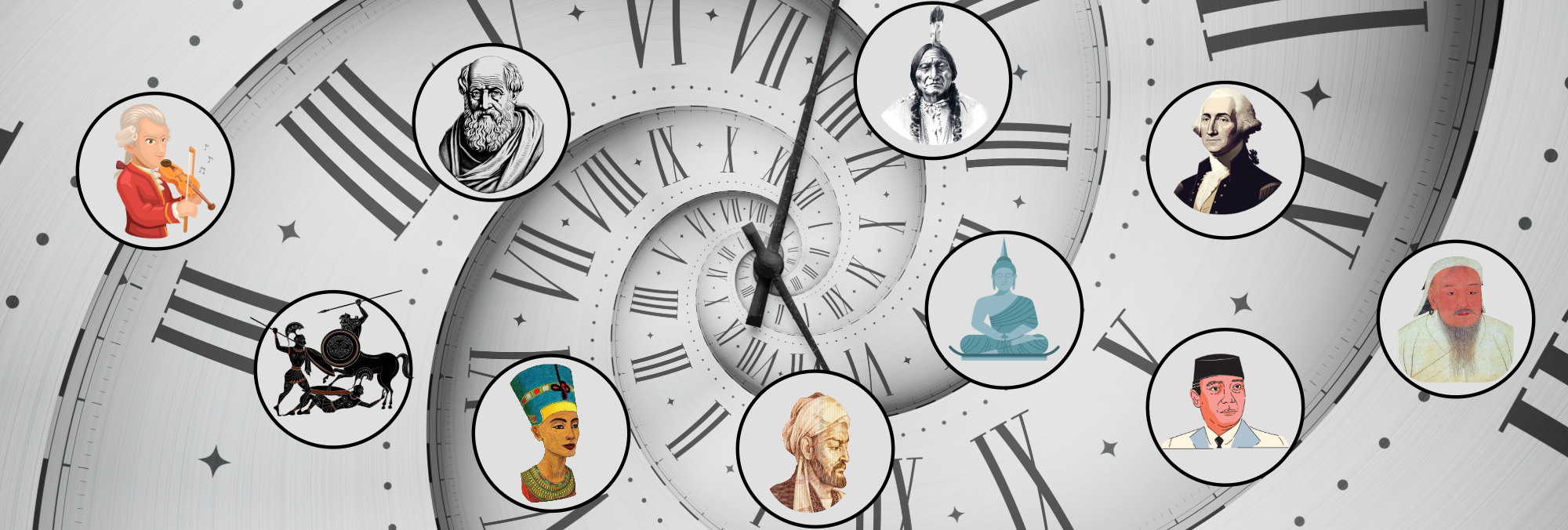
The humanities have always felt a little like a time machine to me.
Time in the humanities moves in circles rather than straight lines. Students step into different centuries, different cultures, and different ways of seeing the world. They experience the consequences of decisions made long ago and try to understand people whose lives may seem distant from their own. Yet somehow, in the process, they find themselves.
The questions they encounter are rarely limited to dates, places, or events. They are questions about justice. Identity. Responsibility. Power. Freedom. Community. Questions about what it means to make choices—and what it means to live with them.
“Critical thinking is not a skill that floats free of knowledge.” – E. D. Hirsch, Jr.
What makes this especially meaningful at Waldorf is that these questions are grounded in a rich and carefully sequenced study of history, geography, economics, and human civilization.
Beginning in the elementary years, our Humanities program is built around the Core Knowledge curriculum developed by educator E. D. Hirsch and the Core Knowledge Foundation. The program rests on a simple but powerful idea: before students can think deeply about the world, they must first know something about it.
In many educational conversations today, people speak about “critical thinking” as though it exists independently of knowledge. Hirsch argued the opposite. Students develop the ability to analyze, question, compare, and evaluate ideas precisely because they possess a broad foundation of shared knowledge on which to build.
That philosophy is visible throughout our Humanities sequence.
INSIDE WALDORF HUMANITIES
In Grades 1 through 6, students explore civilizations, world geography, cultures, historical eras, influential people, and major events through the Core Knowledge History and Geography curriculum. Each year introduces substantial new content while continually building connections to previous learning.
By Grades 7 and 8, students revisit world history at a deeper and more analytical level through the Core Knowledge World History program. Rather than merely learning what happened, students begin asking why it happened, how events connect across regions and centuries, and what lessons they continue to hold for the present day.
By the time students reach high school, the journey becomes even more sophisticated. Grade 9 students undertake a full-year Economics course grounded in the CEE Standards for Economics Education, allowing them to examine human decision-making, markets, incentives, and public policy through a thoughtful and deeply human lens. In Grade 10, students engage in an advanced year-long Pre-AP World History and Geography course that emphasizes historical reasoning, analysis of evidence, and global perspectives.
In Grades 11 and 12, students have the opportunity to continue their studies through rigorous advanced courses such as AP World History, AP Human Geography, AP Economics, AP Psychology, and others—bringing together years of accumulated knowledge and increasingly sophisticated analytical thinking.
Because students arrive in high school with such a substantial foundation of historical, geographical, and economic knowledge, they are able to engage these advanced courses at a level of depth and sophistication that would be difficult to achieve otherwise.
“Critical thinking does not begin when students stop learning facts; it begins when they know enough about the world to ask better questions.”
But what strikes me most is not the curriculum itself.
It is the change you begin to notice in students.
You see it in the way they listen.
You hear it in the way they speak.
You recognize it in the questions they ask.
Slowly, often quietly, they begin to understand that history is not merely something that happened to other people. Geography is not simply a collection of places on a map. Economics is not only about money. The humanities are, ultimately, about human beings—our choices, our stories, our successes, our failures, and our endless attempts to make sense of the world around us.
The humanities are not merely reflections on the past: they are reflections on what will be. They help students become more aware…more thoughtful…more informed…more human.
Perhaps that is why they feel so timeless.
“The humanities take us back in time—but more importantly, they help us arrive at who we are, and who we are still becoming.”
Because the humanities do not simply tell us where we have been: they help us understand where we are––and they challenge us to think carefully about where we might go next.
Perhaps that is why they feel so timeless—because they take us back in time, but more importantly, they help us arrive at who we are, and who we are still becoming.
––Razan Mbaideen, Waldorf Activities Coordinator